

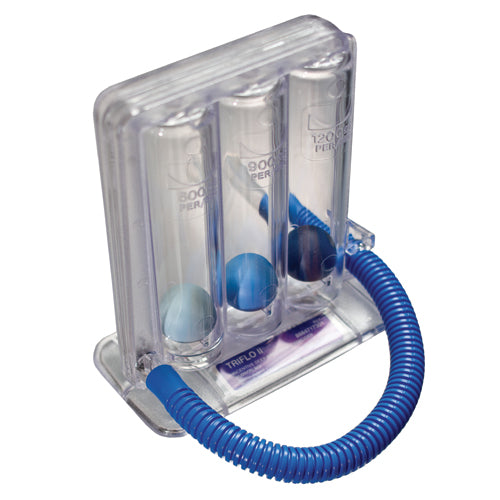




Triflow II 3-Ball Incentive Spirometer 600-1200cc/sec Deep Breathing Aid
The Triflow II Incentive Spirometer provides clear visual inhalation feedback with three color-coded balls in separate chambers,...
Availability:
Out Of Stock
- Regular price
- $39.99
- Regular price
-
- Sale price
- $39.99
- Unit price
- per
Subtotal:
$39.99
10 customers are viewing this product
Couldn't load pickup availability
Description
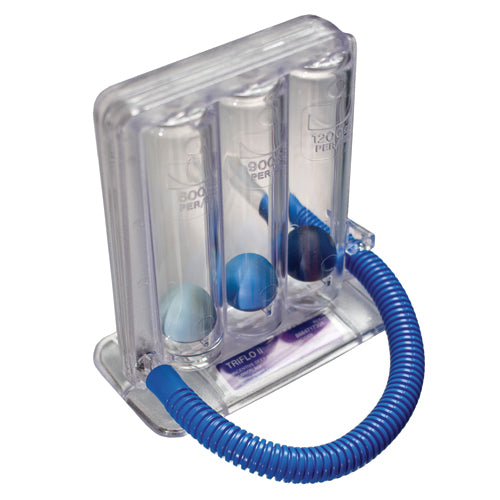
xThe Triflow II Incentive Spirometer provides clear visual inhalation feedback with three color-coded balls in separate chambers, each rising in response to inhalation flow rate. The wide flow rate range of 600 to 1200 cc/sec accommodates a broad range of respiratory training needs. The minimum flow rate required to raise each ball is imprinted directly on its chamber, making it easy to set progressive goals and track improvement over time. Break-resistant plastic construction for durable daily use at home or in clinical settings.
Key Features
- Flow-oriented 3-ball design — three color-coded balls provide clear visual inhalation feedback
- Three separate chambers — each with minimum flow rate imprinted for progressive training goals
- Wide flow rate range — 600 to 1200 cc/sec accommodates a broad range of users
- Compact and lightweight — practical for bedside, home, and clinical use
- Break-resistant plastic construction — durable for daily use
Specifications
- SKU: 166
- Type: Incentive spirometer
- Design: 3-ball, flow-oriented
- Flow Range: 600 to 1200 cc/sec
- Chambers: 3
- Construction: Break-resistant plastic
- Country of Origin: China
Ideal For
Respiratory therapists, pulmonologists, and clinicians who prescribe incentive spirometry for patients requiring deep breathing exercises during post-operative recovery or pulmonary rehabilitation will find the Triflow II a simple, visual flow-oriented option with a 600 to 1200 cc/sec range and color-coded progressive training chambers. Hospitals, outpatient clinics, and long-term care facilities that stock incentive spirometers for patient bedside use will find the Triflow II a consistently available break-resistant plastic option suitable for single-patient use. Home care users and caregivers who need a durable, easy-to-use incentive spirometer for daily deep breathing practice at home will find the color-coded ball design and imprinted flow rate targets practical for self-guided training. Physical therapists and occupational therapists who incorporate incentive spirometry into respiratory conditioning programs will find the Triflow II a straightforward flow-oriented tool with clear visual feedback for patient motivation and progress tracking.
Frequently Asked Questions
What is the difference between a flow-oriented and a volume-oriented incentive spirometer?
A flow-oriented spirometer like the Triflow II measures and displays the rate of airflow during inhalation — the balls rise when the inhalation flow rate reaches the threshold for each chamber. A volume-oriented spirometer measures the total volume of air inhaled in a single breath and displays it on a calibrated scale. Volume-oriented spirometers are generally considered more clinically precise for measuring inspiratory capacity, while flow-oriented spirometers are simpler to use and provide immediate, intuitive visual feedback. The appropriate type depends on the clinical protocol and the prescribing clinician's preference.
How do I use the Triflow II correctly?
Sit upright or as upright as possible. Exhale normally, then place the mouthpiece in your mouth and create a tight seal with your lips. Inhale slowly and steadily through the mouthpiece, trying to raise as many balls as possible and keep them elevated for as long as you can sustain the inhalation. The goal is a slow, controlled inhalation — not a fast, forceful one. Rest between breaths and repeat as directed by your healthcare provider.
How many times per day should I use the spirometer?
The frequency and duration of incentive spirometry sessions should be determined by your healthcare provider or respiratory therapist based on your specific condition and recovery stage. Do not exceed the recommended frequency without consulting your healthcare provider.
How should the spirometer be cleaned?
Rinse the mouthpiece and tubing with warm water after each use and allow to air dry completely before the next session. The device is intended for single-patient use and should not be shared between patients. Do not submerge the main unit in water or use harsh disinfectants that could damage the plastic components.
NOTE: THIS ITEM WILL BE IN STOCK AFTER 8/31/26.
Related Products
PRECISION LAB WORKS
Example product title
- Regular price
- $39.99
- Regular price
-
- Sale price
- $39.99
- Unit price
- per
PRECISION LAB WORKS
Example product title
- Regular price
- $39.99
- Regular price
-
- Sale price
- $39.99
- Unit price
- per
PRECISION LAB WORKS
Example product title
- Regular price
- $39.99
- Regular price
-
- Sale price
- $39.99
- Unit price
- per
PRECISION LAB WORKS
Example product title
- Regular price
- $39.99
- Regular price
-
- Sale price
- $39.99
- Unit price
- per
PRECISION LAB WORKS
Example product title
- Regular price
- $39.99
- Regular price
-
- Sale price
- $39.99
- Unit price
- per
PRECISION LAB WORKS
Example product title
- Regular price
- $39.99
- Regular price
-
- Sale price
- $39.99
- Unit price
- per
PRECISION LAB WORKS
Example product title
- Regular price
- $39.99
- Regular price
-
- Sale price
- $39.99
- Unit price
- per
PRECISION LAB WORKS
Example product title
- Regular price
- $39.99
- Regular price
-
- Sale price
- $39.99
- Unit price
- per
PRECISION LAB WORKS
Example product title
- Regular price
- $39.99
- Regular price
-
- Sale price
- $39.99
- Unit price
- per
PRECISION LAB WORKS
Example product title
- Regular price
- $39.99
- Regular price
-
- Sale price
- $39.99
- Unit price
- per
Recently Viewed Products
PRECISION LAB WORKS
Example product title
- Regular price
- $39.99
- Regular price
-
- Sale price
- $39.99
- Unit price
- per
PRECISION LAB WORKS
Example product title
- Regular price
- $39.99
- Regular price
-
- Sale price
- $39.99
- Unit price
- per
PRECISION LAB WORKS
Example product title
- Regular price
- $39.99
- Regular price
-
- Sale price
- $39.99
- Unit price
- per
PRECISION LAB WORKS
Example product title
- Regular price
- $39.99
- Regular price
-
- Sale price
- $39.99
- Unit price
- per
PRECISION LAB WORKS
Example product title
- Regular price
- $39.99
- Regular price
-
- Sale price
- $39.99
- Unit price
- per
PRECISION LAB WORKS
Example product title
- Regular price
- $39.99
- Regular price
-
- Sale price
- $39.99
- Unit price
- per
PRECISION LAB WORKS
Example product title
- Regular price
- $39.99
- Regular price
-
- Sale price
- $39.99
- Unit price
- per
PRECISION LAB WORKS
Example product title
- Regular price
- $39.99
- Regular price
-
- Sale price
- $39.99
- Unit price
- per
PRECISION LAB WORKS
Example product title
- Regular price
- $39.99
- Regular price
-
- Sale price
- $39.99
- Unit price
- per
PRECISION LAB WORKS
Example product title
- Regular price
- $39.99
- Regular price
-
- Sale price
- $39.99
- Unit price
- per
- Choosing a selection results in a full page refresh.